
An economic versus existential trade-off: The Retro Report, vol. 25
GOING DEEP ON SURFACES WITH "FLESH WORLD" REPORTER JESSICA DEFINO

The Retro Report and I were on vacation last week! Now that I’m back, it is time to answer a long-considered question of this newsletter. In the tradition of previous inquiries such as “why do celebrities sound like that?” and “why do new movies look like that?” comes a third installment: What is happening to film now that so many actors look like that?
While people in showbiz have been “getting work done” (a fascinating and obfuscating euphemism to be dissected at a later date!) since Hollywood’s earliest days, the ubiquity and sci-fi-adjacent possibility of modern cosmetic procedures has created a new normal in which it seems the majority of people in any given movie do not look like “real” people at all. Today’s period pieces are littered with anachronistically plump lips and perfect teeth, and every man—regardless of age, station, or profession—has the ripped body of a comic book superhero. Emotions barely register on all those frozen faces. This week, the latest trailer for Christopher Nolan’s The Odyssey dropped and brought with it another wave of this discourse:
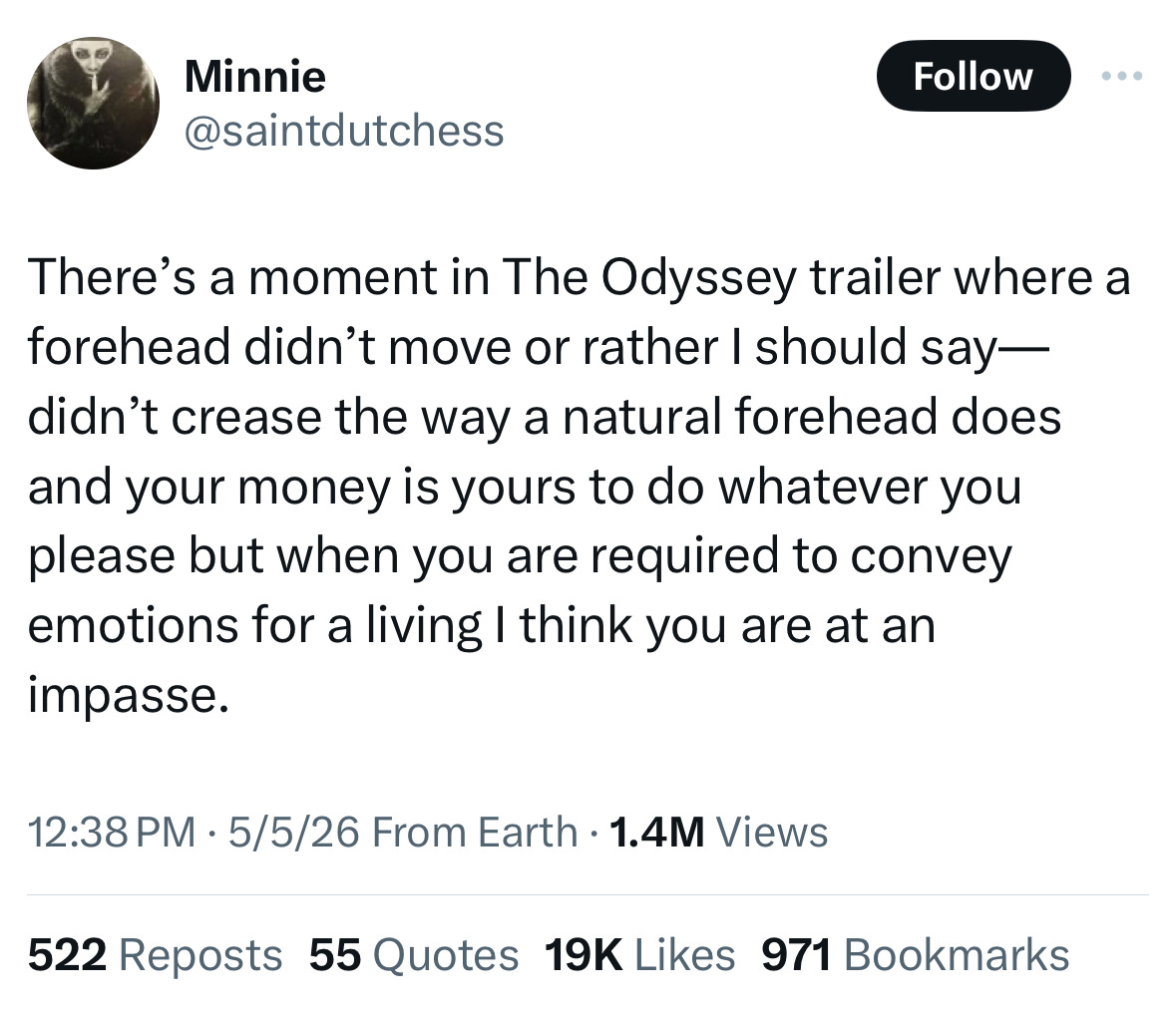
It’s a big factor, in my opinion, in the question I explored for the New York Times on the unreality of modern movies. It’s not just the CGI that’s looking faker and faker, but the actors themselves, nearly all of whom seem to have availed themselves of cosmetic interventions that make them register as less and less like a person you or I could see on the street, and more like some heightened, Facetuned, impossible not-quite-a-person, who we are then supposed to believe—for purposes of the movie—is, say, a single mom who works two jobs or whatever.
This subject came up in my interviews with the Deveney brothers (“as soon as an actor takes his shirt off in 2025, he’s RIPPED”) and Tom van der Linden, but to really dig into this issue, I called up Jessica DeFino, a beauty reporter whose newsletter, Flesh World, investigates and analyzes the beauty industry: its extractive and exploitative practices; its impossible promises; its co-opting of the language of empowerment, feminism, and liberation (“be your best self!”). I spoke with her for my story on cosmetic dentistry and celebrity teeth; I knew that she would GET it.
DeFino had many great insights into the “aesthetic labor” actors are required to perform and how the ubiquity of elective cosmetic procedures has altered cinema and, by extension, our collective relationship to that art form. Tragically NONE of these insights made it into my NYT piece because this section got cut for space. But that’s why God made newsletters! Read our (edited and condensed) Jessica x Jessica conversation below and let me know your takes in the comments!
My sense is that one of the reasons movies don’t look real anymore and therefore provide a less immersive experience and profound connection between audiences and art is that people don’t look real. I’d love to know what you make of that.
Back in the day, from the beginning of movies up until maybe a couple decades ago, a lot of aesthetic labor creating that celebrity glow onscreen for actors and actresses was performed by cameras and lighting, and a lot of our modern beauty standards are impacted by that sort of almost low-quality look. The camera was low-definition. It inherently had this blurring effect, an ethereal quality, that became associated with Hollywood.
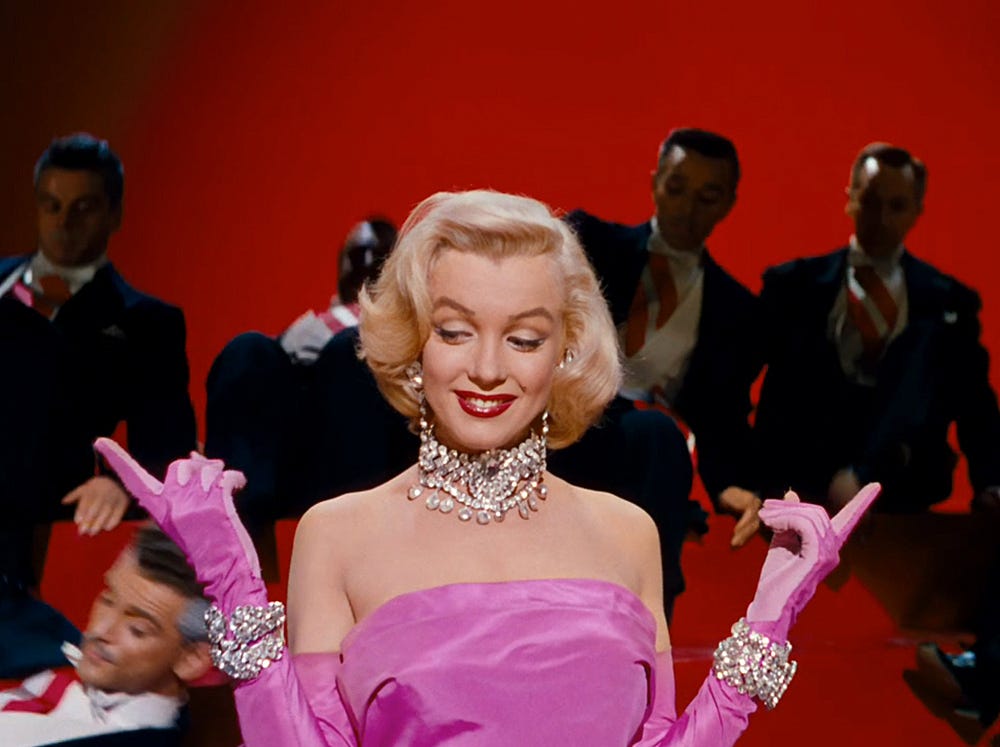
Even lighting techniques—which inspired modern highlighter and contour; we’re creating these mini lighting setups on our actual faces now—a lot of that was done by Hollywood technology. As tech has advanced in cinema, it’s sort of displaced a lot of that labor. Now that aesthetic labor has to be done by the performer to create that blurred, perfecting effect.
When the resolution is more clear, high-definition, it makes what was previously blurred hyper-visible. And the standard of not having those lines, blemishes or pores be hyper-visible is still very much there. So the aesthetic labor has shifted to beauty industry techniques and technology that makes what the camera was doing possible for the human body.
Tell me about the things people seem to be doing in this line of work that make their faces look less like a face that you or I would see at the grocery store.
I refer to this as “aesthetic inflation”: the normalization, over time, of more and more extreme cosmetic enhancements. I think still for the most part, these technologies and enhancements are only available to a certain class of people. Even as they are becoming more democratized, it’s still the upper echelon of people who have access to these things. As simple as laser treatments for the skin, microneedling, these non-invasive or semi-invasive technologies that are meant to blur pores and fine lines, to address hyperpigmentation, to create this smooth, textureless, uniform look of the skin, which is not realistic at all. Texture is part of being human!
Then you get to the next level of injectables: like Botox, like fillers, even the salmon sperm facials people are doing, these regenerative technologies that help your body create more of its own collagen, creating this smooth, textureless sensation that does not exist for the average person in real life. The next tier of that is invasive: surgery, blepharoplasty is huge right now, facelifts and mini facelifts, threadlifts, lip lifts, even. Enhancing the jawline or the chin with filler.
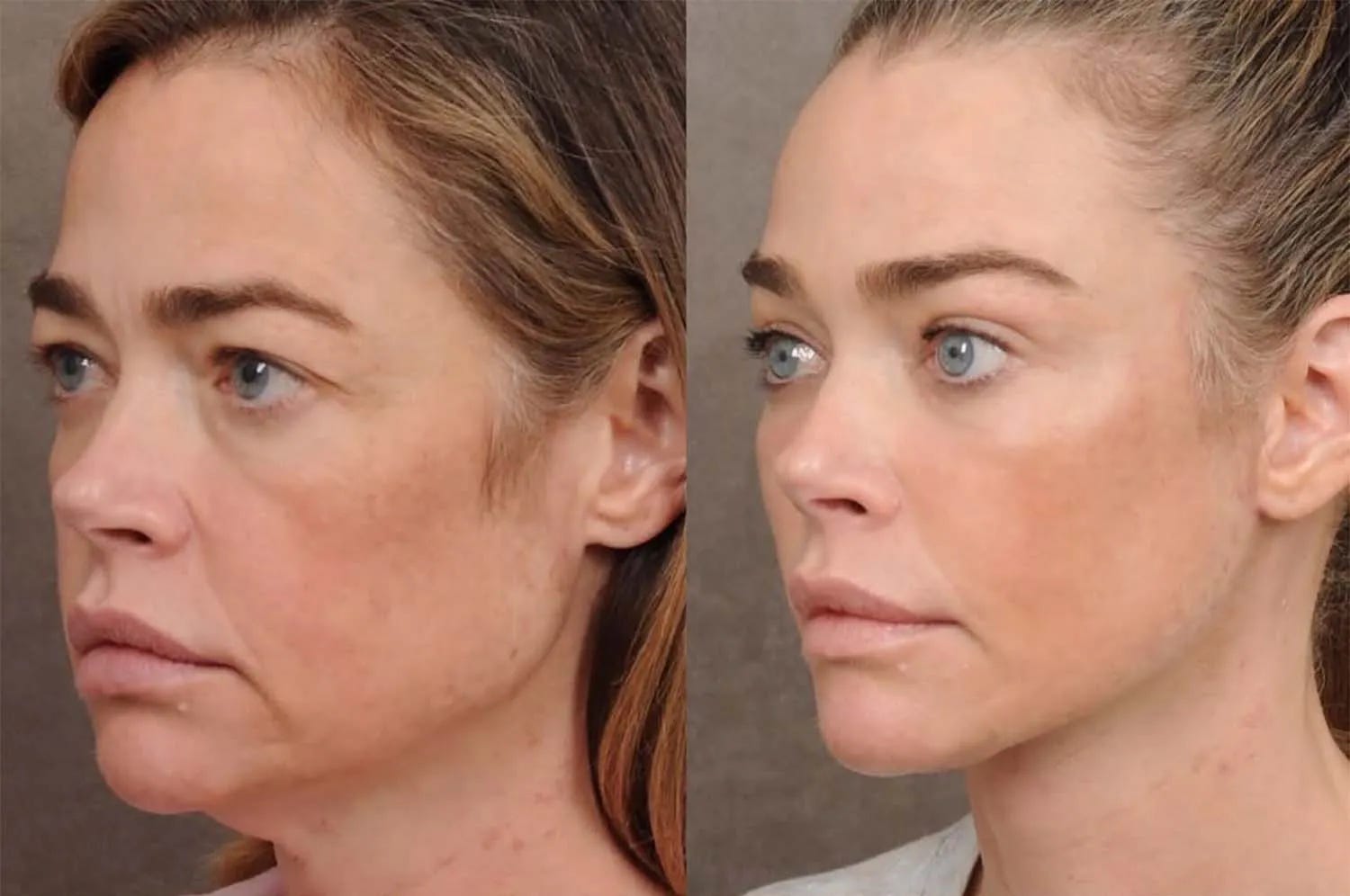
And then there’s things like eyebrow microblading, lash lifts and tints, things that seem like low aesthetic labor but still contribute to this unnatural perfection — even as we’re trying to make them look like natural, “no makeup makeup” enhancements. There’s a lot going on, especially for this class. The typical Hollywood performer has access to, in terms of cosmetic treatments, things that are still pretty rare for the average person.
Something I think about so much is our peers, who are some of their generational greats—the Emma Stone, Jennifer Lawrence, Anne Hathaway generation of actresses. Actresses who are 20 years older than they are didn’t have access to this technology—a lot of it didn’t even exist—so they were able to look more human for a longer stretch of their career and do career-best performances. They were able to have full use of their gift, which included their humanity in their face.
And I wonder all the time: How does it feel to know you’re one of the greats while existing in this ecosystem where there are expectations for your physical appearance that all but require you to do all of this stuff1. How are you going to give your career-great performance in ten years? And what character could any of these women possibly play, except for a super-rich person or an alien2, because they’re just going to look less and less like you and me?
Oh, I love that thought! The first thing that comes to mind for me is: faces tend to work better for me as a viewer in roles where that aesthetic labor is acknowledged. I think of Nicole Kidman in Babygirl: there were direct references to getting Botox and lip filler and that was a part of a character who was obsessed with automation and perfection, and worked in the robotics industry. There were clear parallels drawn between that character and the aesthetic enhancements she was doing.
As viewers, we know that this cosmetic enhancement is going on for the actors and actresses, and when it is not part of the script, it is this jarring experience. Because Hollywood is supposed to be a fantasy, right? We’re supposed to be able to lose ourselves in these stories. And when we’re hyperaware of these hyper-visible procedures that the actor themself has had done, separate from the role they’re playing, it takes us out of the fantasy that we’re supposed to be living within in the movie.
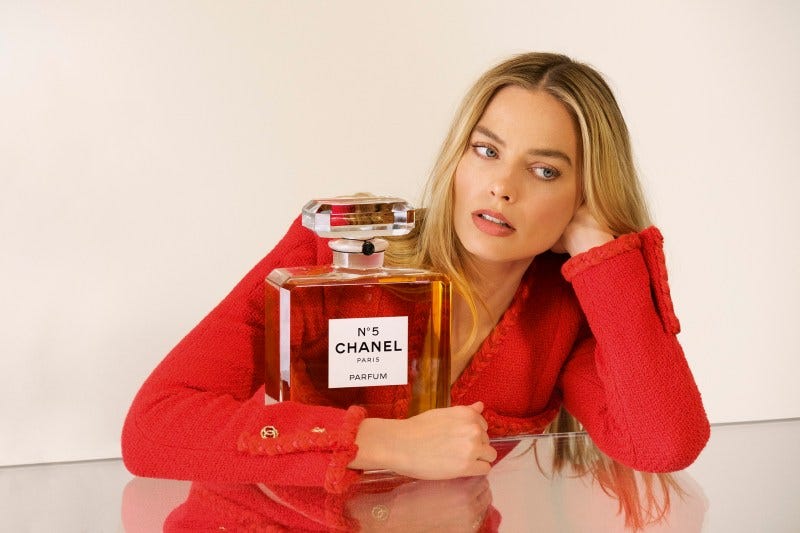
I think, too, about the economics of being an actor today. All these actresses have fashion and cosmetics contracts that pay much more, I’m sure, than the vast majority of their film work. So if you’re doing this calculus of: Okay, what do I prioritize? The face that will get me the cosmetics contract or the face that will serve my craft? The financial math is just not in favor of art, ever.
Completely! It makes me think of the celebrity beauty brand boom as well. For a lot of celebrities, beauty is actually the first job they have. Before you’re allowed to become an actress or singer, you have to perform that labor of becoming beautiful. Once you’ve successfully presented yourself, then you’re allowed the prestige and work in your chosen field. When you think about it, it is the first priority of the job a lot of times. So it makes sense that actresses would, then prioritize beauty over, say, the function of expressiveness for their job of acting.
We cannot let men off the hook here, out of this conversation. I’m fascinated by their hairlines. If you watch a movie from the ‘70s, men’s hair receded. And now it’s almost comical. Like, what a weird coincidence! Everyone who is great at acting also had a perfect Punnett square of hair! WHAT ARE THE ODDS?
This makes me think of The Materialists!3 The Pedro Pascal and Dakota Johnson characters both admit to having cosmetic procedures done. It’s a big part of their character arc. And the Chris Evans character is supposed to be the one who is free from this. But in actuality he’s had the most visible cosmetic work done, via his hairline changing. That just took me out of that movie so much. Because I’m supposed to believe this is a character who doesn’t care about that, and that’s one of the ways he’s standing in opposition, as a foil to Pedro Pascal! And it’s so unbelievable because I know you’ve had your hairline done.
I would also say a lot of this has to do with paparazzi images and the rise of tabloid culture starting in the early 2000s. There’s not a moment in which you’re safe from performing your duty as an actor, or keeping up your image. It’s not something that just happens on the set. It’s something that’s happening constantly through paparazzi, tabloids, and even self-presentation on social media. There’s not a moment when you can just be aesthetically “off.”
To me, this also plays into this broader question of why so many modern movies feel so “meh,” even compared to the average movie from, say, 1995. I think part of it is that: If you’re able to change your hairline, you’re resting on pretty. If you compare that to somebody like Jack Nicholson: We’re talking about a diabolically charismatic man. Everybody wanted to fuck him, and it didn’t matter that he didn’t look like Paul Newman or Robert Redford, because he had it. And if we let all these guys who don’t have it play the main guy, the movie is not as good, because the thing that makes me believe that everybody would fall in love with him is not the hairline!
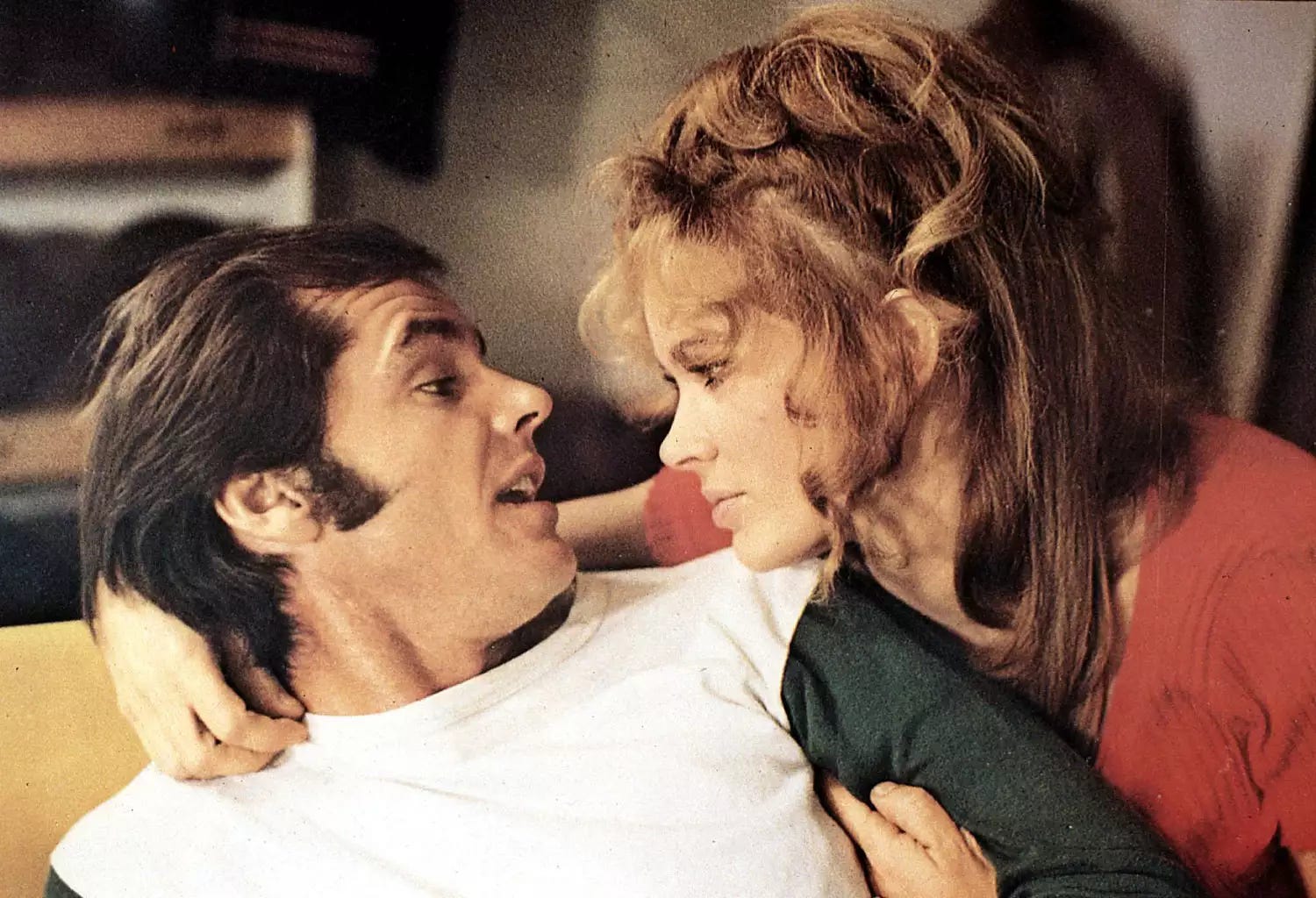
There’s parallels to the wider beauty industry, too, where performing beauty is functioning as a stand-in for personality or expression. So much of the language in beauty is, “I want to look like the real me, the authentic me, I’m expressing myself, this is how I’m choosing to empower myself.” And that language always seems so hollow to me. Because first you must have something to express! And I fear if you ask people. “What are you expressing about yourself through your use of Botox or lip filler?” Few people tend to have an answer to that.
I do think we are living in an age of so much cosmetic surgery and not enough charisma or focus on personality, what actually makes you unique. And that’s another irony of beauty industry language too. So much of it is focused on being yourself, or enhancing features you already have. “You, but better” And what it’s actually leading us toward is this very homogenized look across the big actors and actresses today.
Sometimes when I bring this up, people respond by arguing that Hollywood beauty standards have always been exacting. What do you think is materially different about the “beauty” standard of today and its effect on actors that sets it apart from the exacting beauty standards of a previous generation?
I think the number one thing is just the extreme-ness: the extremity of what’s possible in the beauty industry now. Yes, the standard has always been exacting, but we have such advanced technology for how the standard is created, and with that advancement comes a lot of risk. It’s creating this beauty standard that even average people feel compelled to meet, that requires them to undergo risky, sometimes dangerous procedures—whether invasive or not—that come with a laundry list of consequences. I really do believe that beauty culture is a public health issue, not even physically speaking but psychologically speaking. When you’re introducing new technology, invasive procedures, with potential physical complications, that becomes a more dire public health issue.
“…beauty discourages expressiveness. What is the point of this work? If this is your life’s work, if this is your passion, what does it say about the importance of beauty today that you are willing to be less excellent at what you do and what you love in order to be seen as this perfect beauty?”
I also think there is definitely something about acting specifically, and expressiveness, and how beauty discourages expressiveness. What is the point of this work? If this is your life’s work, if this is your passion, what does it say about the importance of beauty today that you are willing to be less excellent at what you do and what you love in order to be seen as this perfect beauty? I think that says so much about culture today, and is really depressing! What we are willing to give up in pursuit of the things we love to do, that give us joy and life, our own human flourishing: we are willing to limit that in order to adhere to a certain standard beauty. That says so much about the destructive nature of that standard.
When I think about actors and how they’re handicapping themselves, essentially, it’s like: Imagine if, in the world of baseball, it was a given that if you wanted to make it to the majors, you had to cut off two of your fingers. “Am I going to be as good at baseball if I do that?” Well, no, but those are the big leagues, babe! You’ve gotta be an eight-fingered man! People don’t want to watch a gross baseball player with ten fingers!
Oh my God, that’s so good! I think it speaks to so many industries beyond acting, because something that I don’t think gets brought up enough in these conversations is the resources that we funnel into these standards—not just actors and actresses who supposedly have a lot of money—but to the average person they’re influencing.
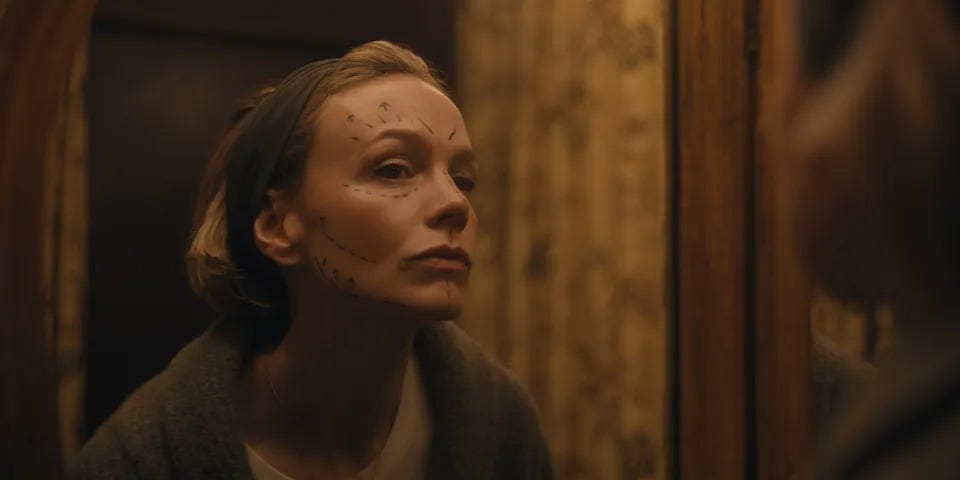
When you look at beauty standards and the lengths we go to meet them, in terms of resources it takes: our time, money, energy, effort, attention, and headspace, it’s really disturbing. Because what else could you be doing with your life or making of yourself? Those are finite resources! You can’t just funnel them all into beauty and then equally funnel them into the things you love to do, or want to do, or things you hope to achieve!
A lot of what’s happening here in movies—and beauty is one aspect of this—is it’s just a less human experience at every step. It’s CGI slop instead of a practical effect; it’s “we’ll fix it in post-production” instead of being intentional on the day; it’s “we’ll make a decision by committee” instead of having a specific artist with a vision. And the overall effect of those choices is: Movies are less connected with our humanity, and then we as people connect less with the art form.
My sort-of conspiracy theory here is: I feel like it’s part of this broader, more insidious project to make all of us less connected to what makes us human, because people who are less connected with their humanity don’t, say, care about the climate crisis, they don’t get mad at ICE agents. We’re easy to manipulate because we just want to sit at home and buy stuff!
I think that is a perfect take. I agree on every level! It makes me think of, on a microlevel with Botox specifically, so much of human communication is in microexpressions that you don’t see. It’s not something you can point out and say, “oh, that’s missing.” But part of our communication is people are making microexpressions with their faces all the time. Our faces, subconsciously, mimic those expressions. That is part of the empathy factor. Especially when you’re watching an actor or actress, when your face is mimicking their face and you’re feeling the moment, that is a physiological thing that connects humans to other humans, and enables empathy, and enables those political outcomes you’re talking about, too.
Definitely, the lack of expression is not just an aesthetic issue of “oh, I prefer more or less expression.” There are studies to show that when we can’t make microexpressions and people cannot mimic our microexpressions, we are connecting on a shallower level.
To me, it’s a classic theme of beauty culture that you write about all the time: There is always a Faustian bargain between the appearance of the thing and the actual thing. People get something like Botox, in a big-picture way, because they believe it makes them more attractive—they will literally attract more people—but the tradeoff is, no one you attract will be able to connect with you emotionally, because your face doesn’t move.
Yes! Sometimes I think of it as an economic versus existential trade-off. A lot of beauty culture is a class performance. A harsh reality that women in particular but increasingly all people are subject to is: the more attractive you are the more opportunities you have out in the world, the more money you may be able to make, the better social outcomes you’ll have. These are all true things. So when we’re striving to make ourselves more beautiful, it’s often an economic bargain. And I always encourage people to think about what they’re losing existentially on the other side of that bargain.
For a sense of how ubiquitous cosmetic interventions are among the Hollywood set, look only to Amanda Seyfried making headlines for forgoing Botox to play the title character in “The Testament of Ann Lee,” who was born in 1736.
One of the MANY things about this movie that made me feel completely insane was when Chris Evans’ character gives his big romantic speech to Dakota Johnson’s character, and the crux of it is literally: “When I look at your face I see wrinkles and gray hair and children that look like you.” When it is quite obvious given this character’s physical appearance that she is not someone who will ever not color her hair or get Botox; also, her character has already revealed to us that she had a rhinoplasty, among other procedures… her children will not look like her unless they do the same!